
Traditional medical education in Kenya has long emphasized theoretical knowledge, leaving many health workers underprepared to manage real-world emergencies.
Transforming Medical Education Through Simulation & Innovation
Building Kenya’s first public-sector simulation ecosystem for emergency and maternal care — preparing frontline health workers for the moments that matter most.
ABOUT THE PROGRAMME
From a single centre to a national resource for clinical preparedness
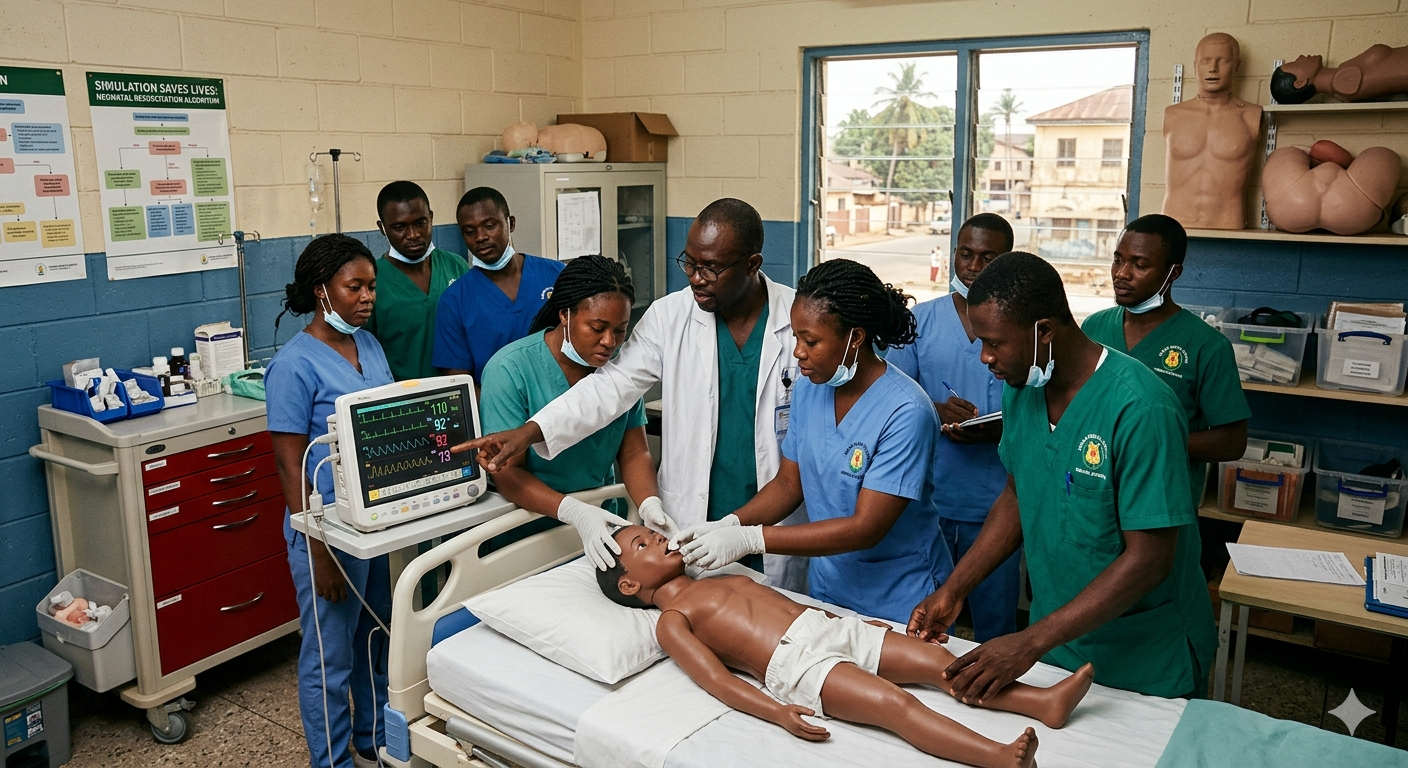
Since 2016, CPHD has played a pioneering role in reshaping how frontline health workers in Kenya are trained, from establishing the country’s first public-sector high-fidelity simulation center to driving multidisciplinary, team-based training and supporting cutting-edge research.
What began as a targeted investment to improve anesthesia education has grown into a national resource supporting hospitals, medical schools, and policy frameworks focused on real-world clinical preparedness.
THE CHALLANGE
Critical gaps in how Kenya's health workers are prepared
Theory Over Practice
Training in Professional Silos
Health workers were trained in isolation with minimal cross-disciplinary exposure, weakening the team-based response critical in emergency settings.
Gaps in High-Risk Scenario Training
There was no structured support for mastering life-threatening emergencies like postpartum hemorrhage, neonatal resuscitation, or acute respiratory failure.
No Safe Environment to Practice
Without simulation infrastructure, health workers had little opportunity to rehearse critical skills before encountering them in high-stakes, real-life situations.
OUR APPROACH
A phased response that grew from a centre to a system
Establishing Kenya's First Public-Sector Simulation Centre
- Partnered with Jaramogi Oginga Odinga Teaching and Referral Hospital (JOOTRH) in 2016 to set up the centre
- Originally created to support the national nurse anesthesia training programme
- Equipped to simulate real clinical scenarios using advanced manikins and task trainers
- Centre successfully transitioned to full hospital ownership and management
Expanding Across Specialties & Rapid COVID-19 Response
- Supported simulation-based training and faculty mentorship for Pediatrics, Emergency Medicine, Obstetrics & Gynecology, Critical Care, and Nursing
- Embedded simulation into everyday learning for team-based emergency response
- Trained over 600 health workers on COVID-19 screening, PPE protocols, and ARDS management during the pandemic
- The simulation centre became a key national training hub during the crisis
Ongoing Innovation: AI for Learning
- Currently implementing a one-year research project (2025) on AI-enabled learning platforms
- Exploring how digital tools can support scale-up of maternal health innovations
- Focused on tailored, interactive clinical training designed for low-resource settings
- Building evidence for the next generation of simulation and digital health education in Kenya
KEY RESULTS
What Changed
From infrastructure to skills CPHD's simulation work has produced tangible, lasting change across Kenya's health workforce.
- Kenya's first public-sector high-fidelity simulation centre established at JOOTRH and successfully transitioned to full hospital ownership.
- Over 1,500 health workers trained in high-stakes emergency care, including neonatal resuscitation, Basic and Advanced Cardiac Life Support (BLS & ACLS), and maternal and newborn emergencies.
- Over 600 health workers trained during COVID-19 on screening protocols, PPE donning and doffing, and management of acute respiratory distress syndrome (ARDS).
- Simulation-based training embedded across multiple clinical specialties pediatrics, emergency medicine, obstetrics and gynecology, critical care, and nursing.
- Active AI-enabled learning research underway (2025) to explore scalable, digital clinical training platforms for low-resource settings.
2016
Year Programme Launched
1,500+
Health Workers Trained
600+
COVID-19 Workers Trained
1st
Public-Sector Sim Centre in Kenya
WHY IT MATTERS
Effective health systems don't just need more staff they need competent, prepared teams.
By investing in simulation infrastructure, faculty mentorship, and innovation, CPHD has helped institutionalize simulation as a core pillar of Kenya's medical education system shifting training from passive knowledge transfer to active, team-based problem solving.
“When health workers are prepared, lives are saved.”
“Readiness is not a luxury it is the standard.”