
In 2015, Kenya had fewer than 60 graduate nurse anesthetists serving a population of over 47 million, far below what safe surgical care requires.
Safe Surgery & Anesthesia for Every Community
Building the surgical workforce and infrastructure to deliver timely, life-saving surgical and anesthesia care in Kenya’s hardest-to-reach counties.
ABOUT THE PROGRAMME
Closing three critical gaps in surgical care
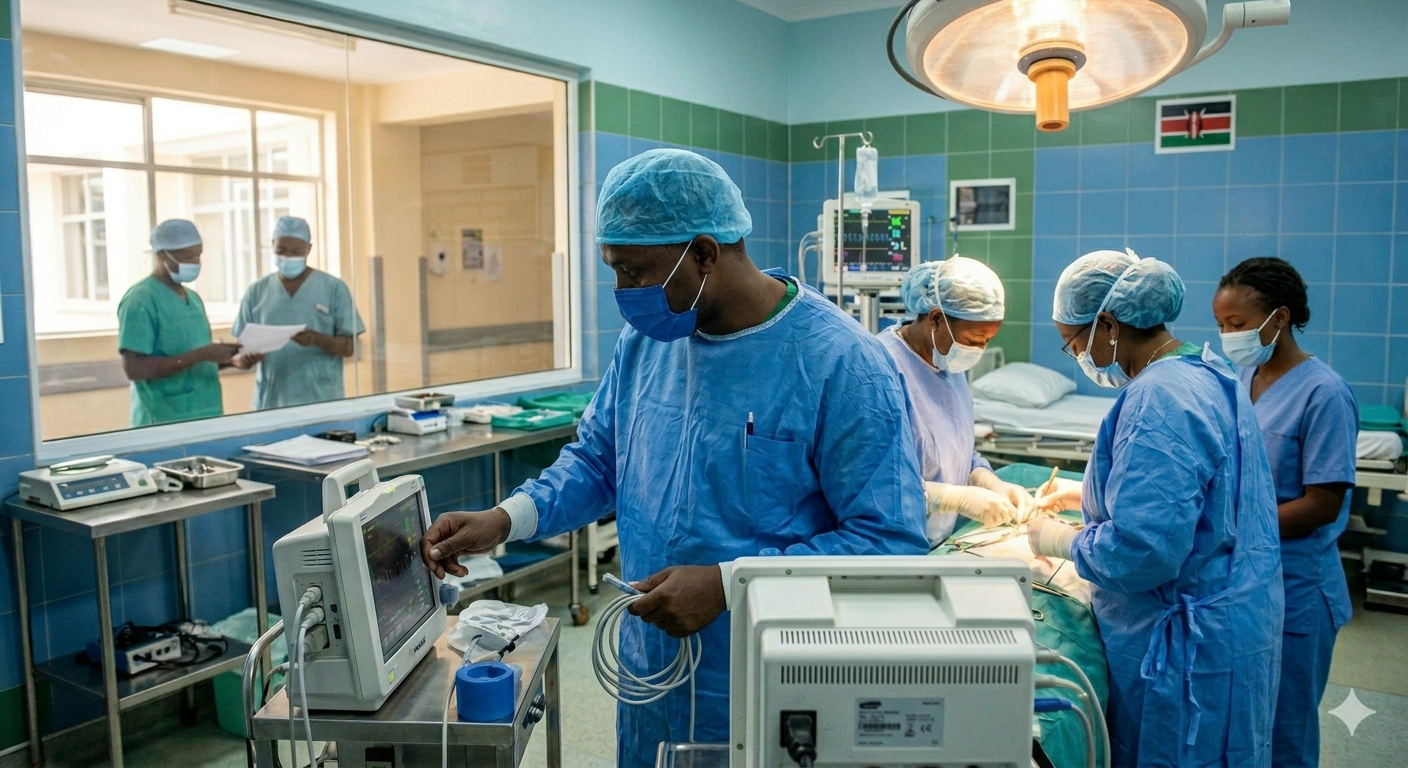
The Safe Surgery and Anesthesia (SaSA) initiative strengthens Kenya’s ability to deliver timely, safe, and life-saving surgical and anesthesia care, with a focus on underserved and hard-to-reach counties.
Led by CPHD and supported by a coalition of national and international partners, the project addressed three critical system gaps: the shortage of anesthesia providers, poor surgical infrastructure, and weak coordination among clinical teams.
THE CHALLANGE
Preventable deaths from delayed and unsafe surgical care
A Critical Shortage of Anesthesia Providers
Inequitable Distribution Across Counties
95% of Kenya's counties had less than one anesthetist per 100,000 people, well below the recommended minimum of 4 per 100,000.
Unreliable Power in Surgical Facilities
Many facilities lacked reliable electricity, preventing safe delivery of anesthesia and newborn care. Essential equipment, monitors, oxygen concentrators, warmers could not function consistently.
Siloed Training, Weak Team Response
Emergency obstetric care requires coordinated teamwork, but providers were trained in silos with limited opportunity to rehearse emergency scenarios together.
OUR APPROACH
Three pillars to build a resilient surgical system
Infrastructure & Energy Systems
- Transformed two dormant operating theatres in Turkana County, at Katilu and Longiyani, into functional surgical sites
- Installed solar power systems to ensure reliable energy for safe surgery and newborn care in off-grid settings
- Renovated operating rooms with equipment compatible with off-grid energy systems
- Delivered refresher training for medical officers on basic obstetric surgery, including caesarean sections
Workforce Development
- Led the development and national rollout of Kenya's first public-sector Kenya Registered Nurse Anesthetist (KRNA) training programme
- Co-designed an 18-month curriculum with the Kenya Medical Training College
- Supported the first policy for specialist nurses, defining the scope of practice for nurse anesthetists
- Provided scholarships to 89 nurses, primarily from underserved counties, to ensure equitable distribution of providers
- Facilitated training-of-trainers, faculty mentorship, and academic infrastructure upgrades
Simulation-Based Education
- Established Kenya's first high-fidelity simulation lab in the public sector at Jaramogi Oginga Odinga Teaching and Referral Hospital
- Trained over 300 health workers to manage obstetric emergencies, postpartum hemorrhage, pre-eclampsia, high spinal block, and obstructed labour
- Integrated neonatal resuscitation and CPR training to strengthen emergency response as a team-based effort
KEY RESULTS
What Changed
From Turkana's newly powered theatres to a national cadre of nurse anesthetists SaSA has delivered measurable, lasting transformation.
- 89 nurses enrolled under CPHD support, contributing to the scale-up of nearly 500 nurse anesthetists nationwide, with 85% coming from underserved counties.
- 76% of graduates are working in government facilities; 100% of sponsored graduates remain in public service.
- Over 1,000 health workers trained on team response to obstetric emergencies, including PPH, pre-eclampsia, obstructed labour, COVID-19 protocols, and neonatal resuscitation.
- Two previously non-functional theatres in Turkana now perform emergency caesarean sections with reliable solar power and trained staff.
- More than 300 health workers trained on obstetric and newborn emergency care using high-fidelity simulation.
- Functional Comprehensive Emergency Obstetric and Newborn Care (CEmONC) sites increased across several counties: Mandera (5), Kisumu (3), Homa Bay (3), and Turkana (2).
89
Nurses Trained on Scholarship
1,000+
Health Workers Trained
85%
Trainees from Underserved Counties
100%
Sponsored Graduates in Public Service
WHY IT MATTERS
Improving surgical outcomes requires more than equipment it requires qualified teams, resilient infrastructure, and supportive policy.
SaSA demonstrates that country-led solutions integrating workforce development, infrastructure improvement, and policy reform can deliver safe surgery even in the most remote communities. This is CPHD's commitment: building systems that not only function, but last.
“Qualified teams. Resilient infrastructure. Lasting systems.”
“Safe surgery is not a privilege, it is a right.”