
Devices are too complex, too fragile, or incompatible with local resources including inconsistent power supply.
Newborn Essential Services and Technologies (NEST)
Improving newborn care through essential equipment, training, and biomedical systems
ABOUT THE PROGRAMME
Saving newborn lives through essential technology & training
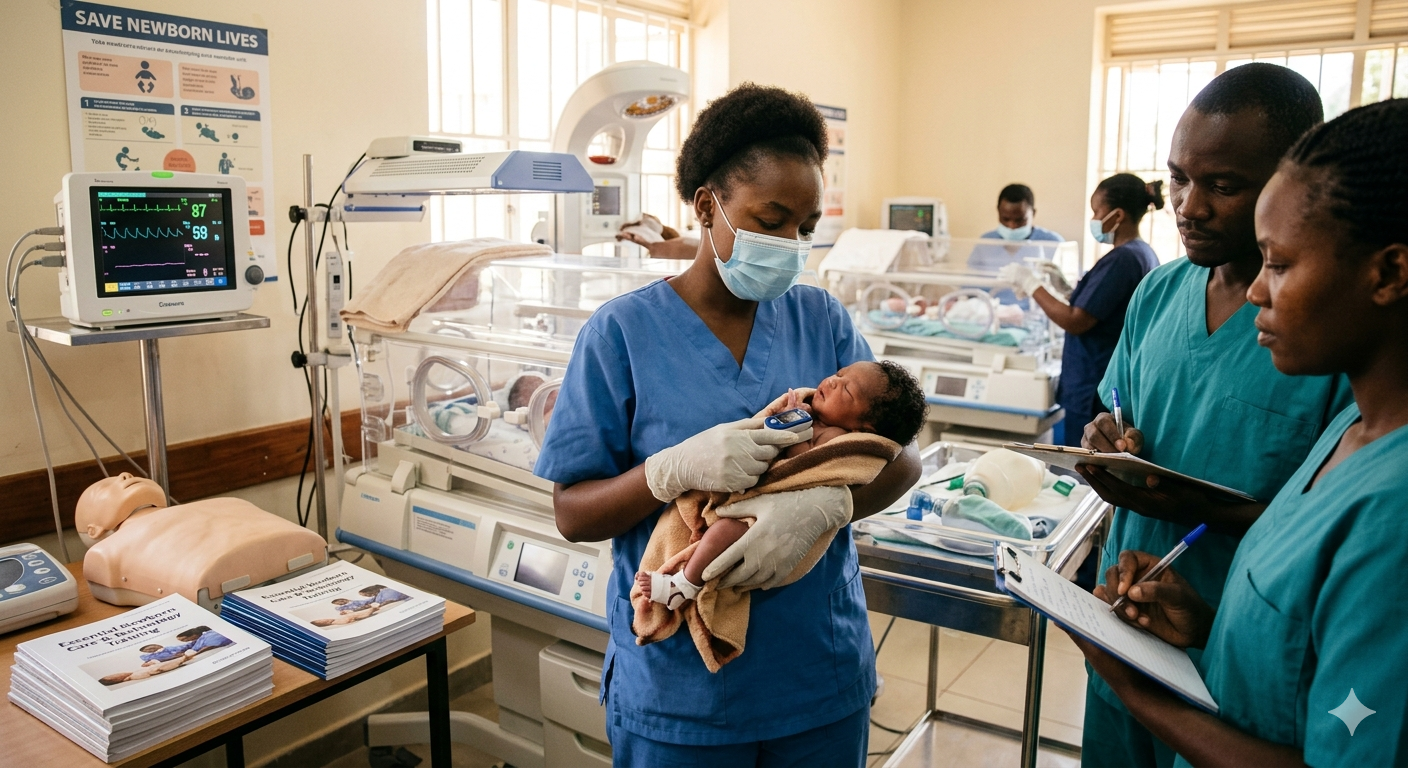
The NEST Kenya project improves survival and outcomes for small and sick newborns by ensuring access to affordable, reliable medical technologies across 10 counties.
THE CHALLANGE
Preventable deaths from lack of basic equipment
Every year, thousands of Kenyan newborns die from hypothermia, respiratory distress, and infections yet these deaths are preventable with the right tools and training.
Context mismatch
Inadequate training
Healthcare workers lack the knowledge to use, operate, or troubleshoot critical neonatal equipment.
Weak maintenance systems
Poor biomedical support leads to long equipment downtimes, loss of devices, and disrupted patient care.
“Sustainable newborn care requires not just tools, but systems that support their long-term use.”
OUR APPROACH
Equipment. Training. Systems.
A three-pillar approach that goes beyond simply supplying equipment to build lasting capacity at every level.
Procurement & Installation
Sourced and deployed the full NEST360 equipment bundle across 13 healthcare facilities, ensuring compatibility with local infrastructure and energy supply across 10 counties.
Clinical Training
Trained 154 nurses, pediatricians, and clinical officers to safely operate technologies, apply WHO clinical protocols, and troubleshoot equipment at user level.
Biomedical Systems
Designed and delivered a biomedical training program for 36 engineers and technicians on preventive maintenance and repair of neonatal devices, building local expertise beyond donor timelines.
KEY RESULTS
Evidence-based, affordable equipment
The NEST360 bundle is a carefully selected package of devices proven to address the leading causes of newborn mortality in low-resource settings.
- Bubble CPAP machines
- Phototherapy units
- Pulse oximeters
- Light meters
- Neonatal CPAP
- Oxygen concentrators
- Suction machines
- Radiant warmers
13
hospitals equipped
10
counties reached
154
clinicians trained
36
biomedical engineers
WHY IT MATTERS
When paired with training, maintenance, and systems thinking, technology will not only transform care but also save lives. The NEST project shows that even in resource-constrained settings, it is possible to deliver consistent, high-quality care to newborns when investments in equipment are matched with workforce and systems support.
“Sustainable newborn care requires not just tools, but systems that support their long-term use.”